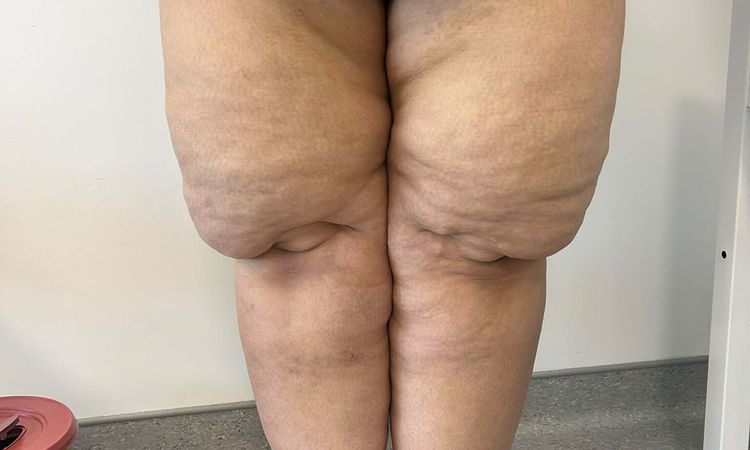
İZMİR City Hospital Physical Therapist Dr. Zeynep Alev Özçete warned against lipedema, a disease that manifests itself with symmetrical fat accumulation and pain in the legs and is often confused with obesity in society. Emphasizing that lipedema is not just a weight problem, Dr. Özçete said, "Rather than a treatable condition, this disease is a hormonal, genetic and transitional fatty tissue problem that must be managed correctly throughout life."
Specialist working at Izmir City Hospital Physical Therapy and Rehabilitation Clinic. Dr. Zeynep Alev Özçete made evaluations about lipedema (painful fat accumulation syndrome), which seriously reduces the quality of life of especially female patients and is diagnosed late. Pointing out that many women who apply to outpatient clinics think that this disorder is just a structural overweight, Dr. Özçete shared the unknown aspects of the disease, diagnostic criteria and current treatment approaches.
Stating that lipedema is a chronic and progressive fatty tissue disease that especially affects women, Specialist said. Dr. Giving information about the most prominent features of the disease, Zeynep Alev Özçete said, "As emphasized in the latest 2024 guidelines, lipedema is not just an aesthetic or weight-related problem, it is a syndrome with a very high pain component. 95 to 99 percent of the patients are women. The most important distinguishing feature is that the lower extremities, that is, the legs, are symmetrically involved, but the hands and feet are preserved. Sensitivity to touch, easy bruising, increased capillary vessels and daytime "The feeling of fullness and pain in the legs are the most common complaints," he said.
Referring to the difficulty of diagnosis of the disease, Dr. Özçete pointed out that lipedema is often confused with lymphedema and obesity. Stating that the diagnosis is based entirely on clinical examination, Özçete said, "Not every overweight person has lipedema, and thin people can also have lipedema. There is no laboratory test or imaging method to make the diagnosis. The diagnosis is made entirely through physical examination and the complaint history we receive from the patient. In recent years, awareness has increased with the influence of social media; now patients directly ask us 'Am I lipedema?' "It comes with a question," he said.
IT IS MANAGED BY LIFESTYLE CHANGE, NOT MEDICATION
Dr. says that there is no single miraculous drug or method in the treatment of lipedema. Özçete stated that the most critical step is patient education. Emphasizing that lipedema fat tissue has an inflammatory structure, unlike obesity fat tissue, Dr. Özçete gave the following information about nutrition and exercise protocols:
"We apply nutritional models to reduce the reaction of the fat tissue here. Although the effectiveness of the ketogenic diet has been shown in scientific activities, it is not sustainable in the long term. Therefore, in the clinic, I recommend to my patients an anti-inflammatory diet that excludes foods containing gluten and casein (milk-dairy products), foods with high sugar content, and packaged foods. When the mentioned foods are removed from the diet, we observe serious improvements in the patients' pain."
Stating that exercise is essential to regulate circulation and control weight, Dr. Özçete said, "Since there is microcirculation disorder in the legs, we recommend exercises that will exercise large muscle groups. However, in order to protect the joint structure of our patients, we prefer gradually increasing resistance exercises and an active lifestyle instead of very intense, high-tonnage exercises."
Dr. also talked about the devices and supportive methods used in the treatment. Özçete summarized the methods applied at Izmir City Hospital as follows:
"Pneumatic compression (air pressure massage) devices in our clinic are not the primary treatment tool alone in lipedema. However, we use these devices to support circulation in patients with intense pain and circulatory disorders. In addition, we recommend medium pressure compression garments specially produced for lipedema to our patients to reduce the feeling of fullness during the day. ESWT (shock wave therapy) and high-intensity lasers are other auxiliary techniques that support the process."
Stating that the disease is triggered during hormonal transition periods in women, Dr. Özçete said, "Lipedema usually occurs or intensifies during periods of hormonal peaks such as adolescence, pregnancy, pre-menopause, or during external hormone treatments. It is vital for women with a genetic predisposition to stay away from factors that will increase their complaints during these periods, pay attention to their nutrition, and learn to manage the disease by adopting an active life."