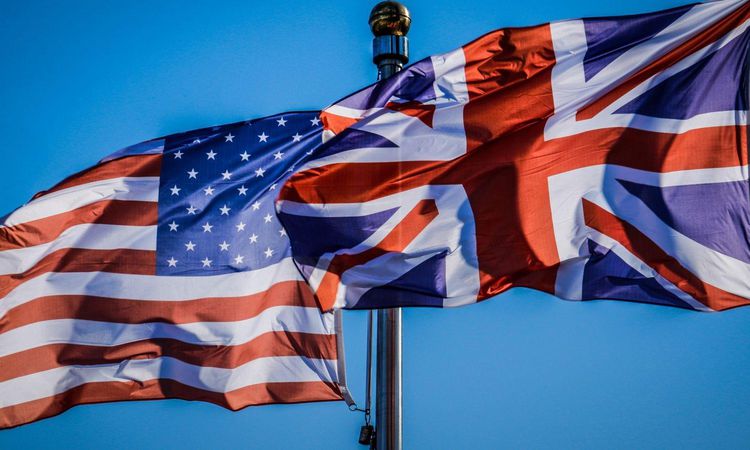
The US Treasury Department and the UK Treasury published a joint statement and four recommendations as part of the Transatlantic Task Force for Future Markets on Tuesday. The task force, established last year, emphasized that the two governments, as global financial centres, must actively shape the development of digital asset markets and next-generation financial infrastructure.
Recommendations include establishing a private sector-led group focused on testing cross-border use cases of tokenized assets. The task force also called on the Bank of England and the UK Financial Conduct Authority (FCA), and in the US the Commodity Futures Trading Commission (CFTC) and the Securities and Exchange Commission (SEC) to develop common approaches to handling tokenised assets. The FCA and the SEC were tasked with exploring options that would facilitate cross-border capital raising.
On the stablecoin front, the two countries issued a joint statement aimed at regulatory harmonization and establishing a dynamic cross-border stablecoin market. According to the statement, each government aims to adapt its own requirements to achieve similar results for similar risks and activities, avoiding market distortions and discouraging cross-border competition while promoting financial stability.
The recommendations stated that stablecoins should be fully collateralized by high-quality, liquid assets on at least a one-to-one basis. The two governments also emphasized strong standards on storage, reserve segregation and consumer protection. In the statement, it was stated that it is aimed to create a framework that gives stablecoin holders a clear and protected legal right over the reserves in a bankruptcy, restructuring or liquidation process, and puts it ahead of other creditors.
The announcement coincided with the stablecoin regulation, which became law in the United States last year, turning one year old this week. The GENIUS Act requires stablecoins to be fully collateralized by U.S. dollars or similar liquid assets, requires annual audits of issuers with market capitalizations exceeding $50 billion, and establishes rules for foreign issuance. Although the transatlantic proposals do not explicitly mention the name of the law, they overlap with this law with the principle of one-to-one guarantee.
Federal agencies are still working on draft rules that would implement the law's provisions. At the session of the House of Representatives Financial Services Committee on Tuesday, Fed President Kevin Warsh, when asked at what stage the central bank is in its rule activities and whether it will meet the July 18 deadline, said that they are racing to meet this date. The effective date of the law is expected to be January 2027.