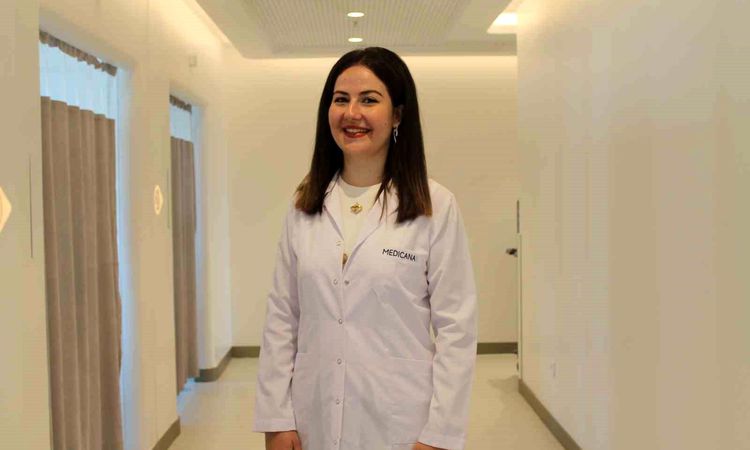
Mothers who have just welcomed their babies sometimes wish to lose weight quickly. Emphasizing that rapid action should not be taken to lose weight after childbirth, Specialist Dietitian Mısra Aydın from Medicana Health Group's Nutrition and Dietetics Department highlighted that the postpartum period is a time for healthy recovery, not rapid weight loss, and provided information on how to determine the right time for a safe diet.
Childbirth is not only one of the most special periods in a woman's life but also a significant beginning where the body enters an intensive recovery process. Answering the question "When will I lose my pregnancy weight?" which occupies the minds of many new mothers during this period, Specialist Dietitian Mısra Aydın, a Nutrition and Dietetics Expert at Medicana International İzmir Hospital, stated that there is no need to rush to lose weight after childbirth. Specialist Dietitian Mısra Aydın emphasized that the postpartum period is not a time for rapid weight loss through crash diets, but rather a process for the body to recover and meet the baby's needs. Stating that the body begins to change rapidly immediately after birth, Specialist Dietitian Mısra Aydın underlined the importance of remaining calm about weight changes in the first few weeks, saying, "In the first weeks, a few kilograms are naturally lost with the expulsion of the baby, placenta, and the increased fluid in the body during pregnancy. Therefore, instead of hastily evaluating changes on the scale, it is necessary to allow time for the body to regenerate and recover."
Nutrition strategies for normal and C-section births
Specialist Dietitian Mısra Aydın, stating that the type of birth plays a decisive role in nutrition planning, used the following expressions: "After a normal birth, if there are no health problems and the physician has not indicated otherwise, a balanced nutrition plan can be implemented immediately after delivery. However, this plan should not be a low-calorie weight loss diet; it should be a regimen that supports the mother's recovery and maintains milk production. In the case of a C-section, there is a surgical recovery process. Therefore, adequate intake of protein, vitamins, minerals, and fluids can directly support wound healing. Since excessive calorie restriction can negatively affect this recovery, the focus in the first few weeks should be on healthy recuperation rather than weight loss."
Specialist Dietitian Mısra Aydın, stating that mothers' energy needs increase during breastfeeding and an average of 400-500 kilocalories of additional energy are expended daily for milk production, clarified the problems that unconscious crash diets can cause. Specialist Dietitian Mısra Aydın said that it is important for mothers not to skip meals, consume enough fluids, and eat a balanced diet from all food groups for both their own health and their babies' development. Specialist Dietitian Mısra Aydın stated, "After a doctor's check-up, if their general health condition is suitable, and especially if the breastfeeding routine has been established, mothers can start a personalized nutrition program with a dietitian in the 3rd or 4th month. Healthy weight loss should be between an average of 500 grams and 1 kilogram per week. Faster weight loss can lead to muscle loss, fatigue, nutrient deficiencies, and most importantly, a decrease in milk supply."
Specialist Dietitian Mısra Aydın, also drawing attention to the illusion of 'mothers returning to their pre-pregnancy bodies after childbirth' created on social media, warned mothers not to fall for this illusion and concluded her words as follows: "Every pregnancy and birth process is unique. A mother's recovery rate is affected by dozens of factors, from her pre-pregnancy weight to her sleep patterns, from the type of birth to hormonal changes. Instead of comparing yourself to others, starting light-paced walks and pelvic floor exercises with a doctor's approval, and listening to your own body's needs is the most appropriate approach." - İZMİR