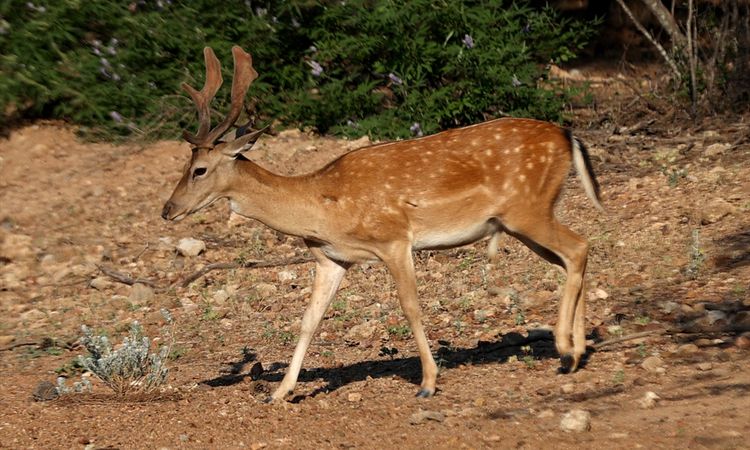
The endangered fallow deer in Düzlerçamı Wildlife Development Area in Antalya gave birth to 5 babies this year.
Doğa Koruma ve Milli Parklar Genel Müdürlüğü, "alageyiklerin (dama dama) dünyada saf ırk olarak tek doğal yayılış alanı" olarak nitelendirilen Antalya Düzlerçamı bölgesinde popülasyonu artırmak için faaliyetlarını sürdürüyor.
In the 521-hectare Eşen Island Wild Animals Breeding Area created in Düzlerçamı, efforts are being made to increase the number of fallow deer without human intervention.
It was determined that the fallow deer, which were followed with camera traps by national parks teams, had 5 babies born this year. With new births, the number of fallow deer in the production area reached 177.
They are transferred to other areas against the danger of forest fire.
Eşenadası Wild Animal Breeding Area Chief Ertürk Reçber told the AA correspondent that the birth of the cubs is important for the continuation of the pure and natural population.
Stating that red deer started giving birth in June, Reçber said that they were very happy to see the babies.
Reçber stated that they have detected 5 cubs so far and that the number of cubs may increase in the coming days.
Explaining that they transported 123 fallow deer from the production site to different areas in Aydın, Muğla, Manavgat and Isparta, Reçber said, "The existence of fallow deer in a single region may endanger its extinction in case of a possible disease or forest fire. That is why we transferred them to different provinces. Our biggest fear in the summer months is forest fire. We have fire action plans. The most important reason for creating natural habitats for fallow deer in different provinces is the danger of flames." he said.
Reçber emphasized that the field is of great importance as it is the only place where fallow deer live as a pure and natural population and said:
"All operations are carried out with minimum contact logic in order to preserve the wild nature of the fallow deer. In addition, activities are carried out to capture fallow deer from outside the field and bring them into the production area in order to replenish blood. When the production station was established in 1966, there were only 7 fallow deer. This number has increased over the years with conservation activities. We also monitor the living spaces and feeding habits of the fallow deer by installing tracking systems. Thanks to these systems, we follow the circulation areas of wild animals and how often they come and go to which areas."