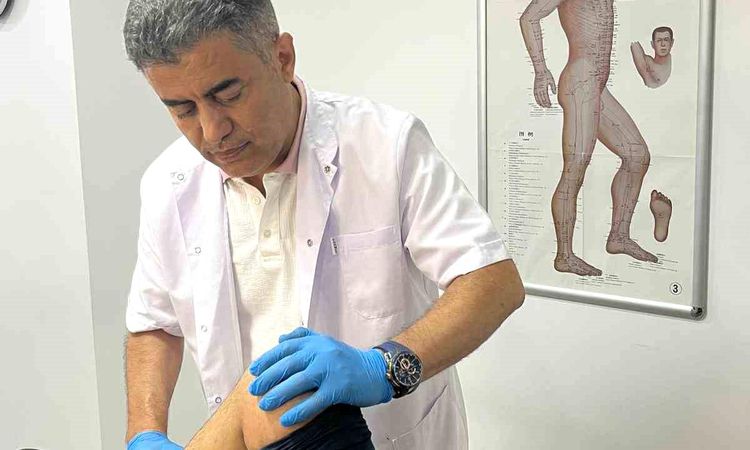
Physical Medicine and Rehabilitation Specialist Prof. Dr. İrfan Koca said that the main goal in stroke treatment is to ensure that the patient reaches the highest possible functional independence.
Experts point out that in addition to physical therapy and rehabilitation practices that form the basis of stroke treatment, scientific activities on holistic supportive approaches have increased in recent years.
Physical Medicine and Rehabilitation Specialist Prof. Dr. İrfan Koca stated that the main goal in stroke treatment is to ensure that the patient reaches the highest possible functional independence and said, "Rehabilitation programs that are started early and individually planned play a fundamental role in the recovery process of patients with exercise, walking training, balance activities, muscle strengthening practices and rehabilitation for daily living activities."
Prof. Dr. Emphasizing that rehabilitation does not only focus on restoring movement functions, Koca stated that the treatment process should be handled from a holistic perspective and said, "Evaluating the nutritional status of the patient during the post-stroke recovery process, ensuring adequate protein intake, and appropriately eliminating vitamin D, vitamin B12 and other vitamin-mineral deficiencies, if there are any, are among the important elements that support the rehabilitation process. In addition, ensuring sleep patterns, evaluating the psychological state, controlling accompanying diseases and gaining healthy living habits are also important components of the treatment."
Stating that the interest in holistic approaches in stroke rehabilitation is increasing, Prof. Dr. Koca said, "In suitable patients and in line with the evaluation of a specialist physician, neural therapy, acupuncture, ozone therapy, some herbal neurological support products and other supportive practices can be evaluated within the rehabilitation program. Instead of a standard treatment model in stroke rehabilitation, a personalized approach is adopted in line with the patient's clinical characteristics, functional status and individual needs. The aim of this holistic approach is to support functional recovery, independent living skills and quality of life by bringing together the most appropriate treatment options for the patient in the light of scientific data."
Stating that the situations in the field of regenerative medicine are also remarkable, Prof. Dr. Koca said, "Scientific activities in the field of regenerative medicine, especially exosome applications, have accelerated. In addition, intensive research is continuing on different biological treatment strategies to support nervous system repair and neuroplasticity. These activities are expected to contribute to new approaches that can be applied in stroke rehabilitation in the future."
Prof. Dr. Stating that scientific data brings a new perspective to the understanding of rehabilitation every day, Koca said, "Scientific data continues to open new horizons in stroke rehabilitation. In addition to evidence-based physical therapy and rehabilitation practices, evaluating holistic approaches supported by scientific research in appropriate patients can contribute to the creation of more comprehensive and personalized rehabilitation programs in the future. Our most important goal is to increase the independence of our patients, improve their quality of life and bring them back to active life." - GAZİANTEP